
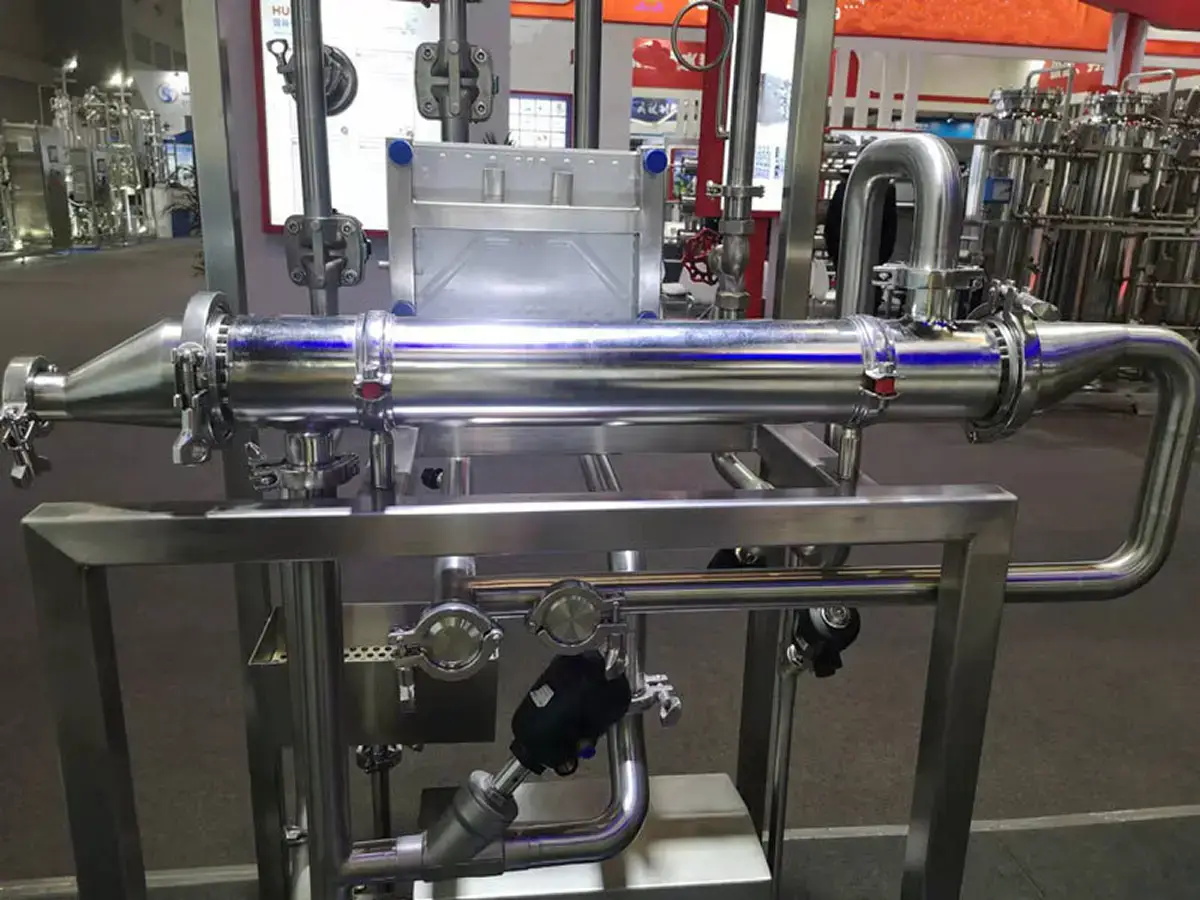
Tubular Heat Exchanger
Efficient and hygienic heat transfer is important for pharmaceutical water systems, liquid preparation lines, and clean utility processes. The tubular heat exchanger supports heating, cooling, and heat recovery applications with sanitary construction, cleanable design, and materials selected according to process conditions.
WEMAC fluid engineering works with well-known heat exchanger manufacturers to optimize installation design after evaluating the heat exchanger’s technical performance and operating parameters. This helps customers select a heat exchange solution that fits the process layout, temperature and pressure requirements, hygiene standards, and maintenance needs.
The tube sheet heat exchanger is suitable for high-temperature and high-pressure process conditions where durability, hygienic design, and cleanability are required.
- Single tube sheet and double tube sheet structures are available to match different process and hygiene requirements.
- The tube sheet structure can withstand high temperature and high pressure, supporting stable operation in demanding process conditions.
- High-quality SS316L seamless stainless steel tubes are used as heat exchange tubes, helping extend service life and maintain hygienic contact surfaces.
- The shaped sealing ring design meets FDA and USP Class VI requirements, supporting pharmaceutical and clean utility applications.
- The no-dead-leg design helps reduce contamination risks and makes cleaning easier.
- Hygienic construction helps limit microbial growth and better support validation requirements.
The plate heat exchanger provides high-efficiency heat transfer in a compact structure, making it suitable for industries that require flexible installation, easy expansion, and convenient maintenance.
- Plate evaporators and heat exchangers are mainly used in the chemical, pharmaceutical, beer, beverage, and dairy industries.
- Aseptic or food-grade interfaces help meet GMP requirements.
- Higher heat exchange efficiency than shell-and-tube heat exchangers helps reduce footprint and support efficient process operation.
- Compact installation helps save space and makes expansion and maintenance more convenient.
- Materials such as SUS304, SUS316L, and titanium can be selected to match different working conditions.
- The tubular heat exchanger and plate heat exchanger options can be selected according to your process temperature, pressure, hygiene, and installation requirements. Contact our team to discuss the right heat exchange configuration for your system.
| Model | Single Plate Area | Plate Material | Gasket Material | Max. Viscosity | Evaporation Capacity |
| |
0.25 m² | SUS304, SUS316L, Ti | NBR, EPDM | 3000 cP | 0.05–0.5 t/h |
| |
0.55 m² | SUS304, SUS316L, Ti | NBR, EPDM | 3000 cP | 0.1–2 t/h |
| |
0.95 m² | SUS304, SUS316L, Ti | NBR, EPDM | 3000 cP | 0.5–5 t/h |